Defib Store Blog
  • Home
  • Blog
  • Shop Online
  • 01298 872 186
  • Search
  • Menu Menu
A detailed blog on how to dispose expired/old AED pads and battery

How to Dispose of AED Pads and Batteries

8 September 2026/in Uncategorised /by Merin

If you look after a defibrillator, at some point you’ll be left holding a set of expired pads or a dead battery, wondering what on earth you’re supposed to do with them. It’s one of the questions we hear most often from customers once the initial excitement of installing an AED has worn off and the maintenance reality sets in.

As an AED reseller, this comes up constantly: someone calls to reorder pads or a battery, and almost as an afterthought asks, “What do I do with the old ones?” It’s a fair question, because unlike a lot of everyday waste, AED consumables sit in an odd category: part electronics, part medical device, part hazardous material, and the answer depends on exactly what you’re throwing away.

Disposing of the expired defibrillator battery

AED batteries are lithium-based, and lithium batteries must never go in general household or business waste. In the UK, this isn’t just good practice; it falls under the Waste Batteries and Accumulators Regulations, and the WEEE (Waste Electrical and Electronic Equipment) framework, which exist precisely because damaged or crushed lithium cells can leak or ignite in landfill.
The good news is that disposing of them properly is genuinely easy.

How to do it

Take the battery to a battery recycling collection point. Most supermarkets have a small bin near the entrance, and local authority recycling centres will accept them too. If you’re not sure where your nearest point is, recyclenow.com will find one for you by postcode.

If your device uses a combined pad-and-battery cartridge, the HeartSine PAD-PAK is the one we’re asked about most; treat the entire cartridge as battery waste, not as pads. It goes to the same battery collection point, cartridge and all.

If you’d rather we handled it

If you’d prefer not to deal with any of this yourself, we offer a collection and disposal service for defibrillator batteries for £32 + VAT. Give us a call on 01298 872186 to arrange it, and we’ll take care of the rest.

Note: If a collection attempt fails because the package isn’t ready and waiting at the address, the £32 + VAT fee is still charged, and a further collection attempt carries an additional £15.

What’s changing for businesses

Businesses producing a reasonable volume of this waste should also be aware that recordkeeping for hazardous waste battery movements is moving from paper consignment notes to a digital system, with receiving sites required to comply from October 2026. It won’t change what you as an individual site need to do, but if you’re a facilities manager tracking compliance, it’s worth knowing that shift is happening.

Disposing of the old AED pads

This is where people most often get it wrong, because the correct answer genuinely depends on whether the pads were used.

Pads that expired without being used

Pads that expired on the shelf and were never applied to a patient can go in your normal waste. Before you bin them, though, cut the electrode wires. It sounds like a small thing, but it stops the pads from being fished out and mistakenly reconnected or reused.

Pads that were used in a real cardiac arrest

These are a different matter entirely. They should be treated as clinical or biohazardous waste, not general rubbish. If you’re a business or organisation, your facility should already have a clinical waste collection arrangement; use it. If you’re a private individual, contact your local council; most either run a clinical waste collection service themselves or can point you to one.

Common AED pad and battery disposal mistakes

“It’s just household rubbish”

An AED battery doesn’t become safer to bin because it’s spent years quietly mounted on a wall, it’s still a lithium battery, in the same hazardous waste category as any other, just in an unfamiliar shape.

No recycling route exists.

Supermarket battery bins, council recycling centres, and manufacturer or supplier take-back schemes all accept AED batteries. The route is almost always there, but not talked about.

All old pads are the same.

Unused, expired pads and pads used in a real cardiac arrest are two different waste streams. Mixing them up is the single mistake we’d flag first.

An expired battery has no charge left.

Most defib batteries retain a genuine residual charge well past their expiry or “replace battery” indicator, even sitting inside the device. On the CR2, for example, once the replace indicator first comes on, the battery is still required to deliver at least 6 shocks and 30 minutes of operating time. Handle every removed battery as live, not inert.

If you’re ever unsure about anything, we are happy to point you in the right direction.

Why it’s worth doing properly

None of this is difficult once you know the steps, but it does matter. A defibrillator’s whole purpose is to protect life, and it feels worth extending a bit of that same care to how its parts are disposed of once their job is done, particularly given how seriously the UK takes battery and electronic waste regulation. Getting rid of a battery / pad responsibly takes two extra minutes over a lifetime of use.
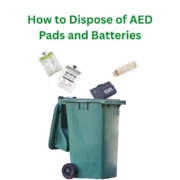
https://blog.defibstore.co.uk/wp-content/uploads/2026/09/How-to-Dispose-of-AED-Pads-and-Batteries.jpg 1080 1080 Merin https://blog.defibstore.co.uk/wp-content/uploads/2023/06/simplified-logo-long.png Merin2026-09-08 13:01:412026-09-15 10:20:34How to Dispose of AED Pads and Batteries
The why, how and what next regarding LIFEPAK CR Plus device, answered.

LIFEPAK CR Plus Device and Accessories Discontinuation – Frequently Asked Questions

16 January 2026/in LIFEPAK CR Plus, Uncategorised, ZOLL Defibrillators /by Merin
Read more
https://blog.defibstore.co.uk/wp-content/uploads/2026/01/Defibstore-6-scaled-e1768482735493.jpg 1110 2560 Merin https://blog.defibstore.co.uk/wp-content/uploads/2023/06/simplified-logo-long.png Merin2026-01-16 13:17:182026-01-27 11:42:02LIFEPAK CR Plus Device and Accessories Discontinuation – Frequently Asked Questions
The why, how and what next regarding LIFEPAK CR Plus device, answered.

LIFEPAK CR Plus Pads and Batteries Discontinued: What This Means for Your Defib & What to do Next

15 January 2026/in LIFEPAK CR Plus, Uncategorised, ZOLL Defibrillators /by Merin
Read more
https://blog.defibstore.co.uk/wp-content/uploads/2026/01/Defibstore-6-scaled-e1768482735493.jpg 1110 2560 Merin https://blog.defibstore.co.uk/wp-content/uploads/2023/06/simplified-logo-long.png Merin2026-01-15 15:33:082026-01-16 13:29:26LIFEPAK CR Plus Pads and Batteries Discontinued: What This Means for Your Defib & What to do Next

Increase the Chance of Survival: The Importance of Public Access Defibrillators

24 July 2024/in Uncategorised /by Merin

80,000!

In the UK, which has a population of over 67 million, there are 80,000 out-of-hospital cardiac arrests every year, with a survival rate of less than 10%. This statistic should have everyone running around like cats on a hot tin roof.

Data provided in a 2023 parliamentary joint briefing by the Resuscitation Council UK, St John Ambulance, and British Heart Foundation shed light on the dire need to install public access defibrillators. This essential research was further supported by a report from the British Heart Foundation, which highlighted an unsettling trend: there is an average of over 500 additional deaths per week related to cardiovascular disease since the onset of the pandemic. 

Read more

https://blog.defibstore.co.uk/wp-content/uploads/2024/07/AED-Team-Pole-Mounted-Cabinet.jpg 960 720 Merin https://blog.defibstore.co.uk/wp-content/uploads/2023/06/simplified-logo-long.png Merin2024-07-24 16:42:252025-03-19 11:51:56Increase the Chance of Survival: The Importance of Public Access Defibrillators
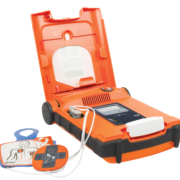
Open Orange Cardiac Science Powerheart G5 public access defibrillator showing adult pads and CPR puck connected to the device

Understanding Impedance in AEDs

24 July 2024/in Uncategorised /by Merin

In CPR, impedance refers to the resistance experienced when compressing the chest.

In defibrillation, impedance refers to the resistance encountered by the electrical current as it travels through the body to reach the heart.

In simple terms:
Read more

https://blog.defibstore.co.uk/wp-content/uploads/2024/06/Cardiac-Science-Powerheart-G5-Adult-Pads-with-CPR-Feedback-scaled-e1718873560861.jpg 222 250 Merin https://blog.defibstore.co.uk/wp-content/uploads/2023/06/simplified-logo-long.png Merin2024-07-24 16:29:482025-03-19 11:53:38Understanding Impedance in AEDs
Don’t wait until it’s too late. Learn CPR today and become a lifesaver

CPR For Adults: What You Need To Know

25 June 2024/in Uncategorised /by Merin

CPR for Adults: What You Need to Know  What is CPR?  CPR stands for Cardiopulmonary Resuscitation.  It is an emergency procedure performed on someone who is in cardiac arrest to restore breathing and circulation. It is used when a person’s heart and breathing have stopped, and they are unresponsive. Why is CPR Important?

Read more
https://blog.defibstore.co.uk/wp-content/uploads/2024/06/Untitled-design-1.jpg 600 2000 Merin https://blog.defibstore.co.uk/wp-content/uploads/2023/06/simplified-logo-long.png Merin2024-06-25 17:09:472025-03-19 11:53:51CPR For Adults: What You Need To Know

Frequently Asked AED Questions

20 June 2024/in Uncategorised /by Merin

We’ve put together our most frequently asked questions to help our customers answer any defib-related questions

Read more

https://blog.defibstore.co.uk/wp-content/uploads/2023/07/299898825_3001670046791308_306488018497391068_n.jpg 1080 1080 Merin https://blog.defibstore.co.uk/wp-content/uploads/2023/06/simplified-logo-long.png Merin2024-06-20 17:21:142025-03-19 12:03:37Frequently Asked AED Questions

What is the The Circuit – National Defibrillator Network?

13 March 2024/in Uncategorised /by Merin

In the UK, the stark reality of out-of-hospital cardiac arrests paints a picture of the urgent need for widespread awareness and urgent action.

Last year, ambulance services in England were called to perform resuscitation in nearly 35,000 patients following sudden cardiac arrest (SCA) emergencies, revealing a challenging survival landscape where only about 8% of patients survived 30 days post-cardiac arrest. This data underscores the critical importance of immediate and effective response in the pivotal moments following a cardiac arrest, highlighting a significant area for improvement: the use of public access defibrillators (PADs).

Read more

https://blog.defibstore.co.uk/wp-content/uploads/2024/03/Untitled-design-42.png 630 1200 Merin https://blog.defibstore.co.uk/wp-content/uploads/2023/06/simplified-logo-long.png Merin2024-03-13 11:38:192025-03-19 12:04:33What is the The Circuit – National Defibrillator Network?

Defib Store: More Than Just a Manufacturer

29 January 2024/in Uncategorised /by SK23Design

Defib Store: Pioneering Life-Saving Solutions in the UK

From our headquarters in the heart of Derbyshire, UK, we at Defib Store have been quietly yet significantly contributing to life-saving efforts. Today we are recognised as the UK’s premier defibrillator cabinet manufacturer. This accolade didn’t emerge overnight; it’s the result of our years of relentless dedication, innovation, and a profound understanding of the critical role public access AEDs play in life-and-death situations.

Read more

https://blog.defibstore.co.uk/wp-content/uploads/2024/03/defib_cabinet_straight_on_perm_lit_copy1-scaled.jpg 2560 1920 SK23Design https://blog.defibstore.co.uk/wp-content/uploads/2023/06/simplified-logo-long.png SK23Design2024-01-29 11:50:422024-08-02 09:26:21Defib Store: More Than Just a Manufacturer
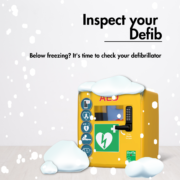
Front façade of yellow, polycarbonate defibrillator cabinet with keypad lock, large viewing window and stages of a rescue graphics. The cabinet has snow on top and it is snowing in the image, with the title - 'Below Freezing? It's time to check your defibrillator.'

The Chilling Truth: Why Cold Weather Requires Visual Inspections of External Defibrillators

28 November 2023/in Uncategorised /by SK23Design

Public access defibrillators have become increasingly common in public spaces, workplaces, and communities. These devices play a vital role in improving survival rates during sudden cardiac arrest (SCA) emergencies. SCA is a life-threatening condition that occurs when the heart suddenly stops beating effectively. Immediate defibrillation, along with CPR, is essential to restoring normal heart rhythm and increasing the chances of survival.

Read more

https://blog.defibstore.co.uk/wp-content/uploads/2023/11/Defib-Store-Time-to-check-your-defib.png 1200 1200 SK23Design https://blog.defibstore.co.uk/wp-content/uploads/2023/06/simplified-logo-long.png SK23Design2023-11-28 10:45:192024-08-02 09:26:38The Chilling Truth: Why Cold Weather Requires Visual Inspections of External Defibrillators
Page 1 of 212

Categories

  • AED Guidance
  • Buying Guides
  • LIFEPAK CR Plus
  • Uncategorised
  • ZOLL Defibrillators

Archives

  • September 2026
  • March 2026
  • January 2026
  • July 2024
  • June 2024
  • March 2024
  • January 2024
  • November 2023
  • October 2023
  • August 2023
  • July 2023
  • June 2023

Menu

  • About Us
  • Terms & Conditions
  • Privacy Policy

Contact Us

Address: Defib Store Ltd, Tideswell Business Park, Tideswell, Derbyshire. SK17 8NY.
Email: sales@defibstore.co.uk
Phone : 01298 872 186

Customer Service

  • My Account
  • Returns Policy
  • Contact Us
© Copyright - Defib Store Blog Website By SK23Design
Scroll to top